Your site is starting to show its age. It’s slower than it used to be, the design screams “2018,” and your clients are pointing it out — sometimes politely, sometimes less so. You know something needs to be done, but one question keeps coming back: do you refresh what you have, or start from scratch? The answer isn’t the same for everyone, and the wrong choice can cost you months and thousands of dollars. Here’s how to see things clearly.
Redesign vs Rebuild — What’s the Difference, Exactly?
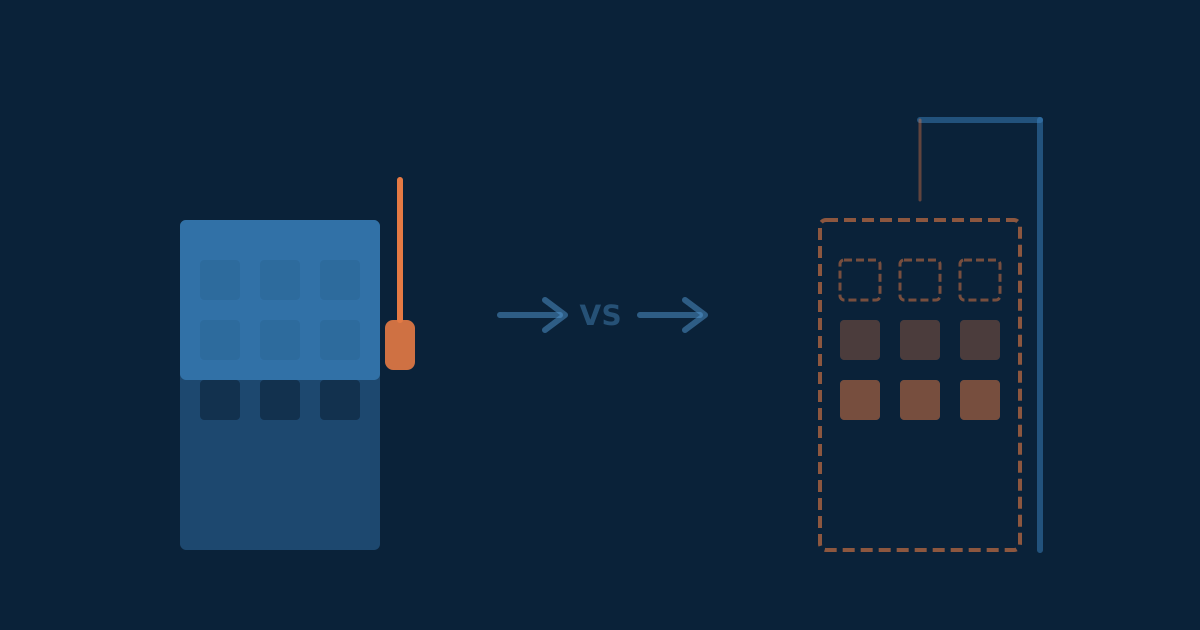
Think of your website like a commercial building.
A redesign is a renovation. You keep the structure, the foundation, the plumbing. You modernize the exterior, rearrange the interior, and improve the experience for visitors. The site stays on the same technical foundation, but it gets a new face.
A rebuild is a demolition followed by new construction. You start from zero — new architecture, new foundations, new everything. It takes longer, costs more, but sometimes it’s the only option that makes sense.
The distinction matters because it directly affects your budget, your timeline, and the end result.
When a Redesign Is Enough
In many cases, your site doesn’t need to be rebuilt. It needs a good refresh. Here are the signs that a redesign is probably the right path:
- The design looks dated, but the site works well day-to-day — no major bugs, no critical slowdowns.
- Your content needs to be reorganized or updated, but the underlying structure holds up.
- The mobile experience leaves something to be desired, but your current platform can handle the fix.
- You want to modernize the look without changing how you manage the site.
In short: if the engine still runs, no need to replace the vehicle. A well-executed redesign can transform your company’s online presence without turning everything upside down.
When You Need to Rebuild
Sometimes the foundation itself is the problem. Here are the signals that a rebuild is the better option:
- Your site runs on outdated or unsupported technology. Updates have become risky or impossible.
- Performance issues are structural — no amount of tweaking is going to fix them.
- Your business needs have fundamentally changed. You need a client portal, an online store, integrations with your internal tools — and your current site was never designed for that.
- Security concerns are piling up and the patches are starting to look like duct tape on a leaky pipe.
This is often where custom web development comes into play. When your needs outgrow what your current platform can offer, a solution built specifically for your business reality becomes a competitive advantage.
The Right Questions to Ask
Before making a decision, ask yourself these questions:
What’s my realistic budget? Not the dream budget — the real one. A redesign generally costs less, but if it doesn’t address the underlying problem, it’s money poorly spent.
Where is my business headed in 2-3 years? If you’re planning significant growth, new services, or a change in business model, your site needs to be able to keep up.
Can my current platform evolve? If every new feature becomes a technical headache, that’s a sign the foundation is limiting your growth.
Is my team self-sufficient? If updating a simple page on your site requires a call to the developer, the content management tool might need rethinking.
The Trap to Avoid
The biggest trap is choosing based solely on the upfront price. A $5,000 redesign that forces you to start over 18 months later will have cost you far more than a $15,000 rebuild that serves you for five years. Think investment, not expense.
What Now?
The right answer — redesign or rebuild — depends on your business reality, not a universal rule. What matters is making an informed decision, based on your goals and the actual state of your site.
Not sure what your site needs? We can look at it together. Contact us for a no-commitment conversation — we’ll evaluate your situation and give you the straight answer, no technical jargon.